Eyelid Surgery (Blepharoplasty) in Miami, FL
Upper, lower and quad blepharoplasty with Dr. Ramiro Morales, a board-certified plastic surgeon with 27+ years of experience. Look rested again, not “done.”
- Board-Certified
- 27+ Years Experience
- American Board of Plastic Surgery

Heavy upper lids and puffy lower lids are often the first things people notice. You sleep eight hours, and someone still asks if you’re tired.
Eyelid surgery (blepharoplasty) removes or repositions the extra skin and fat that cause that look. It doesn’t change the shape of your eyes. It takes away what’s hiding them.
At The Plastic Surgeon Miami, Dr. Ramiro Morales performs upper blepharoplasty, lower blepharoplasty, or both in one surgery. Every plan starts with a close exam of your skin, fat pads, brow position and eyelid muscle, because a tired look isn’t always caused by extra skin.
New to the procedure? Read what eyelid surgery is and how it works, then use this page for surgery, recovery and cost details in Miami.

What Blepharoplasty Can and Can’t Fix
Eyelid surgery works on skin and fat. It does a few things very well and some things not at all. Knowing the difference before your consultation saves time and money.
Blepharoplasty can:
- Remove loose upper-lid skin that folds onto the lashes
- Reduce hooding that makes eyeshadow smudge or disappear
- Flatten puffy bags under the eyes
- Tighten loose, crepey lower-lid skin
- Open up side vision blocked by heavy lids
Blepharoplasty can’t:
- Erase crow’s feet (Botox treats these)
- Lighten dark circles caused by skin pigment
- Raise a low or sagging eyebrow
- Lift a lid that droops because the eyelid muscle is weak (ptosis)
If one of these is your main concern, Dr. Morales will say so at your consultation and explain which treatment addresses it.
Upper, Lower and Quad Blepharoplasty in Miami
The right procedure depends on where the problem sits. After examining your eyes, Dr. Morales will recommend one of three approaches.
Upper Blepharoplasty (Upper Eyelid Surgery)
Upper blepharoplasty removes a strip of excess skin and, when needed, a small amount of fat near the inner corner of the lid. The incision follows your natural eyelid crease, so once healed it sits inside the fold when your eyes are open.
It is often the right choice if you:
- See skin resting on or near your lashes
- Find eyeshadow creasing or vanishing into the fold
- Raise your eyebrows all day to keep your eyes open


Lower Blepharoplasty (Lower Eyelid Surgery)
Lower blepharoplasty treats under-eye bags. These bags are fat that has pushed forward as the tissue holding it in place weakens with age. Concealer can’t hide them because they’re a shape, not a color.
Depending on your skin, the incision is made just below the lash line or on the inside of the lower lid, where it leaves no visible scar. Fat can be removed or moved down to fill the hollow groove between the lid and cheek, so the eye looks smooth instead of sunken.
It is often the right choice if you:
- Have bags that look worse in the morning or under overhead light
- See a hollow line (tear trough) beneath the bags
- Have loose, crinkled skin under the lower lashes
Quad Blepharoplasty (Upper and Lower Eyelids)
Quad blepharoplasty treats all four eyelids in one surgery. It suits patients who have hooding above the eyes and bags below them, a combination that is common after 50.
Treating both lids together means one anesthesia, one recovery and a balanced result. Correcting only the upper lids can make untreated lower-lid bags stand out more, so Dr. Morales assesses both before recommending either.

Who Qualifies for Eyelid Surgery?
Most healthy adults with excess eyelid skin or under-eye bags qualify. You’re likely a good fit if you:

Have hooding, heavy lids or bags that bother you
Don’t smoke, or can stop for several weeks before and after surgery
Have no untreated dry eye, glaucoma or thyroid eye disease
Have blood pressure and diabetes under control
Want a fresher look, not a different face
Dr. Morales reviews your eye health at the consultation and may ask for a recent exam from your eye doctor.
Benefits of Eyelid Surgery
Small changes around the eyes change how the whole face reads. After recovery, patients usually notice:
People stop asking if they’re tired
Eye makeup stays where they put it
Lids feel lighter at the end of the day
A wider, clearer upper field of vision
The skin and fat removed don’t come back, though your face will keep aging naturally.

Male Blepharoplasty in Miami
Men usually come in for one of two reasons: heavy upper lids that make them look tired or stern, or under-eye bags that show up in every photo.
Male eyelid surgery isn’t the same operation as female eyelid surgery. Dr. Morales adjusts:
Crease height: kept lower, so the eye doesn’t look feminized
Skin removal: kept conservative, so some natural fullness stays
Brow position: men’s brows sit lower and flatter, and the plan respects that
Scar placement: hidden in the fold, with no makeup needed to cover it
The goal is for colleagues to notice you look rested, not that you had surgery.
Extra Skin, Low Brow or Ptosis? Finding the Real Cause
Not every droopy eyelid needs blepharoplasty. Three different problems can look almost the same in the mirror:
- Excess eyelid skin: loose skin folds over the crease. Blepharoplasty fixes this.
- Low brow: the eyebrow has dropped and pushes skin down onto the lid. This needs a brow lift.
- Eyelid ptosis: the muscle that lifts the lid is weak, so the lid edge sits low over the pupil. This needs ptosis repair.
Many patients have more than one. Removing skin when the real problem is the brow can make the eye look worse. Dr. Morales checks all three before recommending surgery.


Is Eyelid Surgery Covered by Insurance?
Cosmetic blepharoplasty isn’t covered. Upper eyelid surgery may be covered, including by Medicare, when sagging skin blocks your vision. Insurers usually ask for:
- A visual field test showing vision loss
- Front-facing photos of the eyelids
- A record of daily problems, such as trouble reading or driving
- Measurements showing the lid sits low over the pupil
Lower blepharoplasty is almost always cosmetic. Our team will explain which parts of your plan may qualify.
Blepharoplasty Recovery: What Each Week Looks Like
Eyelid surgery has one of the shortest recoveries in plastic surgery. Most patients are back at a desk in about 10 days. Here’s the typical timeline. Dr. Morales will adjust it to your procedure.
Stage 1
Days 1–2:
Rest and Cold Compresses
Swelling and bruising peak. Your eyes may feel tight, dry or watery, and vision may blur from the eye ointment.
- Cold compresses for the first 48 hours
- Head raised on two pillows or a recliner, even while sleeping
- A driver home and someone with you the first night
- Limited reading, phone and TV, which dry the eyes
STAGE 2
Days 5–7:
Stitches Out
Stitches are usually removed at your follow-up visit near the end of the first week. Bruising turns yellow-green and starts to fade. Keep avoiding bending over, lifting and straining.
STAGE 3
Days 10–14:
Back to Work
Most visible bruising is gone, and many patients return to work and social plans. Wear dark sunglasses outdoors to protect the incisions from the Miami sun.
STAGE 4
Weeks 3–4:
Exercise, Contacts and Makeup
Once Dr. Morales clears you, you can return to the gym, wear contact lenses and use eye makeup again. Mild swelling, mostly in the lower lids, may come and go.
STAGE 5
Months 3–6:
Final Result
Incision lines fade from pink to a fine, pale line in the crease, and the lids settle into their final shape.
How Much Does Eyelid Surgery Cost in Miami?
Blepharoplasty cost in Miami depends mainly on which lids are treated. Upper eyelid surgery is usually the least expensive, and quad blepharoplasty costs the most.
Dr. Morales gives you an itemized quote at your consultation that includes the surgeon’s fee, anesthesia and facility fees. [ADD: “Upper blepharoplasty starts at $X.”]
Monthly payment plans are available through our financing partners.

Choosing the Right Blepharoplasty Surgeon in Miami
Eyelid skin is the thinnest on the body. Remove a few millimeters too much and the eyes can look hollow or surprised, or have trouble closing fully. That’s why the surgeon matters more here than in almost any other procedure.
When comparing eyelid surgeons in Miami, ask:
- Are you certified by the American Board of Plastic Surgery?
- Will you check my brow and eyelid muscle, not just my skin?
- How much skin do you plan to remove, and why?
- Will you see me personally at my follow-ups?
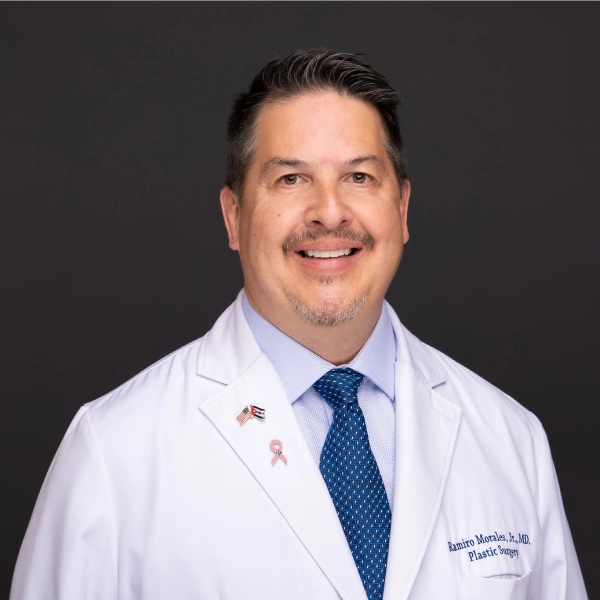
Dr. Ramiro Morales, MD, F.A.C.S., is certified by the American Board of Plastic Surgery and is a member of the American Society of Plastic Surgeons. He earned his medical degree at the University of South Florida, trained in surgery at the University of Illinois at Chicago and serves as Vice Chief of Surgery at Memorial Hospital West.
His approach to eyelids is simple: remove only what’s needed and keep what makes your face yours.
Blepharoplasty FAQs
How long does blepharoplasty last?
Upper eyelid results usually last at least 5 to 7 years and often longer, because the brow and skin keep aging. Lower blepharoplasty rarely needs to be repeated, since the fat that is removed or repositioned doesn’t return.
When can I sleep on my side after blepharoplasty?
Sleep on your back with your head raised for the first two weeks. Side sleeping presses on the lids and can increase swelling. Most patients go back to side sleeping after that, once Dr. Morales confirms you’re healing well.
How long does eyelid surgery take?
Upper eyelid surgery usually takes about an hour. Lower or quad blepharoplasty takes about two to three hours. It’s an outpatient procedure, so you go home the same day.
Is blepharoplasty painful?
Most patients describe tightness and soreness rather than pain. Discomfort peaks in the first two days and is managed with prescribed or over-the-counter medication and cold compresses. Avoid aspirin and ibuprofen unless approved, as they increase bruising.
Does Medicare cover blepharoplasty?
Medicare may cover upper eyelid surgery when drooping skin blocks your vision and a visual field test confirms it. Cosmetic eyelid surgery and most lower blepharoplasty are not covered.
How do I prepare for eyelid surgery?
Stop smoking several weeks before surgery and ask Dr. Morales which medications and supplements to pause, such as aspirin, ibuprofen, fish oil or vitamin E. Arrange a driver, buy cold packs and plan about 10 days off work.
When can I exercise after eyelid surgery?
Light walking is encouraged from the first day. Avoid heavy lifting, bending and hard workouts for about two weeks, because raised blood pressure can cause bleeding and swelling. Most patients return to full workouts in three to four weeks.
Will I still look like myself?
Yes. Good eyelid surgery keeps your eye shape and expression. Dr. Morales removes only the skin and fat causing the tired look, so friends tend to notice you look rested without knowing why.
What is the best age for eyelid surgery?
There’s no set age. Most patients are 35 or older, when skin and fat changes appear, but people with inherited under-eye bags may benefit earlier. Your health and anatomy matter more than your age.
Can I combine eyelid surgery with other treatments?
Yes. Many patients add Botox for crow’s feet or fillers for cheek volume to round out the result. Dr. Morales will explain which combinations make sense for you and when to schedule them.
Talk to Dr. Morales About Eyelid Surgery in Miami
Bring your questions and a photo of yourself from 10 years ago. Dr. Morales will examine your eyes, explain which procedure fits and give you a clear quote.